There is a moment on every zipline course that nobody talks about. It happens right after you land. Your heart is still going, your hands are still gripping the lanyard, and the person behind you has not launched yet. For about fifteen seconds, the forest is completely quiet.
Then it is not. A woodpecker starts drumming somewhere to your left. A chipmunk scolds you from a stump. Something large and brown flaps off a branch you had not even noticed. You realize the forest was full the whole time. You were just moving too fast to see it.
New Jersey has a reputation for turnpikes and traffic, which is a little unfair. Around 42 percent of the state is forested, and some of the wildest parts sit in the northwest corner, right where TreEscape Adventure Park is built into the woods of the Vernon Valley. Here is a guide to the NJ wildlife you might spot from 50 feet up, how to improve your odds, and a printable sheet to bring along.
Why the forests around Vernon are so full of life
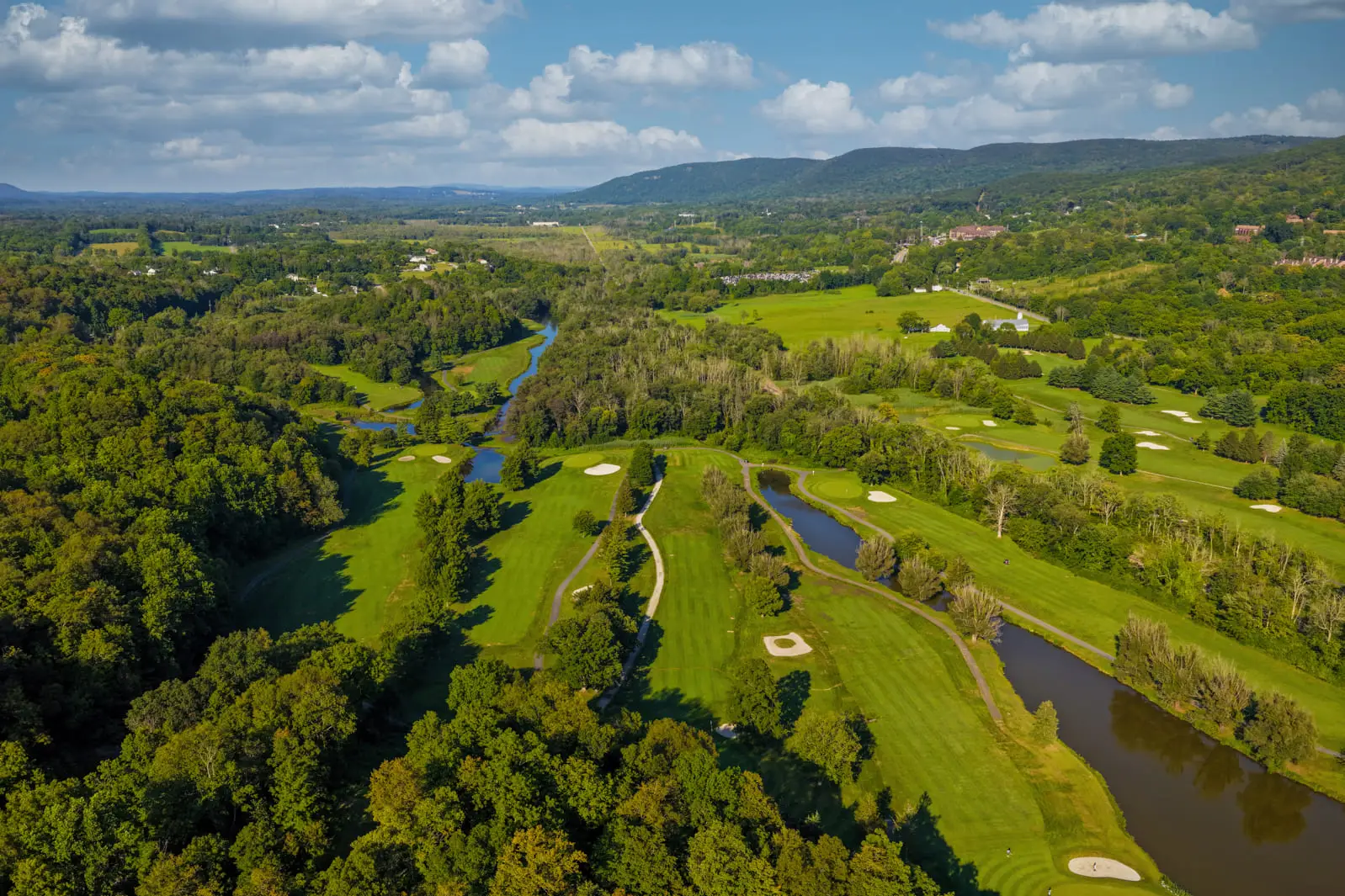
Vernon sits in the New Jersey Highlands, a band of forested ridges and valleys that runs across the northern part of the state. The area is surrounded by protected land. Wawayanda State Park, Abram S. Hewitt State Forest and Hamburg Mountain Wildlife Management Area are all nearby, and the Appalachian Trail passes through the township. The Wallkill River National Wildlife Refuge is just to the west.
That matters for wildlife because animals do not care about property lines. Big, connected stretches of forest let them roam, breed and find food, and the Vernon Valley sits right in the middle of one of the largest blocks of green in the state. Add creeks, wetlands, rocky ledges and a mix of oaks, maples, birches and hemlocks, and you have habitat for an impressive list of species.
In other words, the wildlife in NJ is not just in the Pine Barrens or down the shore. Some of it is hanging out in the trees you are about to zip past.
Why you see more from the canopy
On a normal hike, you see the forest from the bottom up. Most of what lives in the trees is hidden behind leaves, and you mostly notice things on or near the ground.
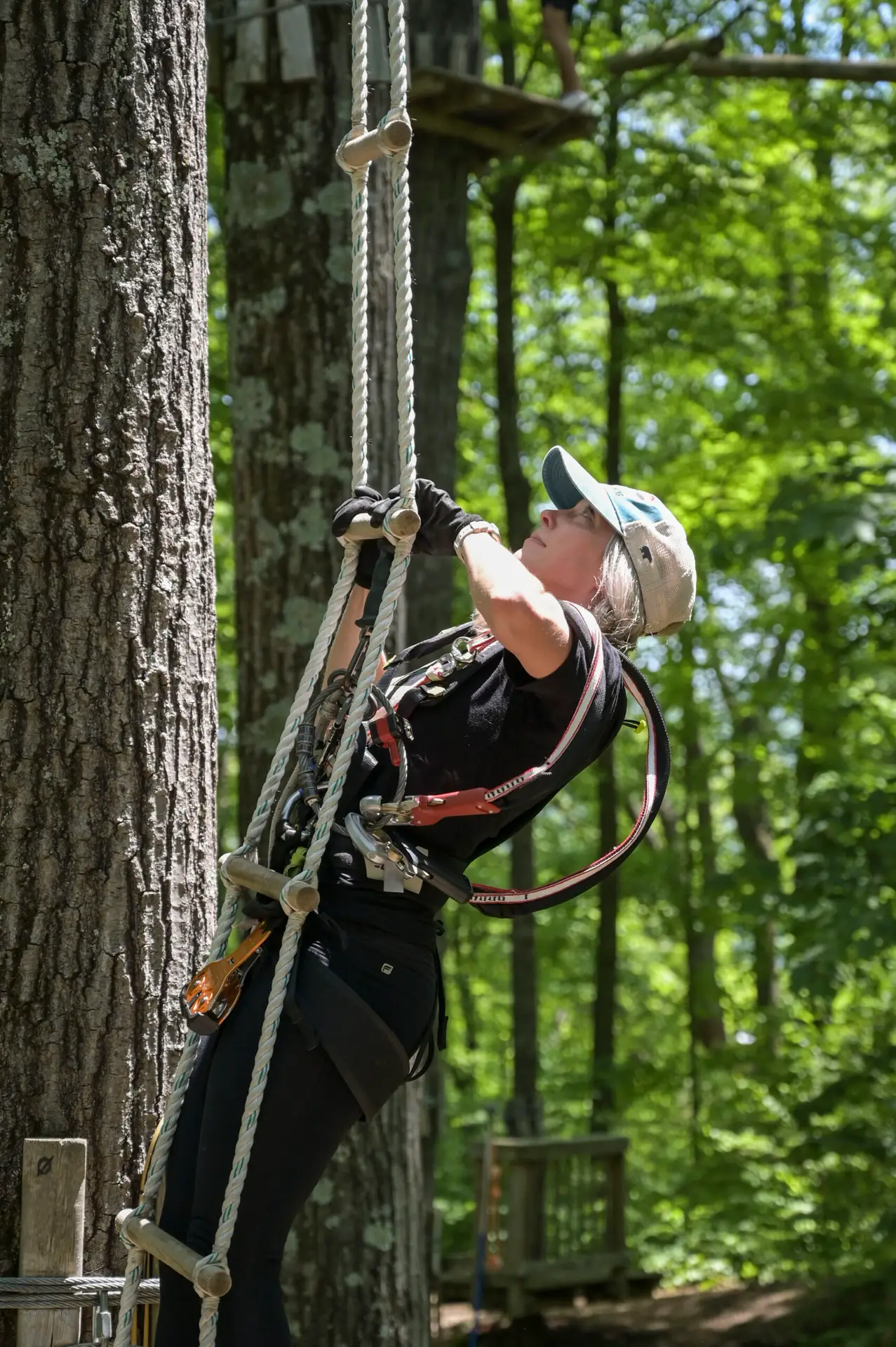
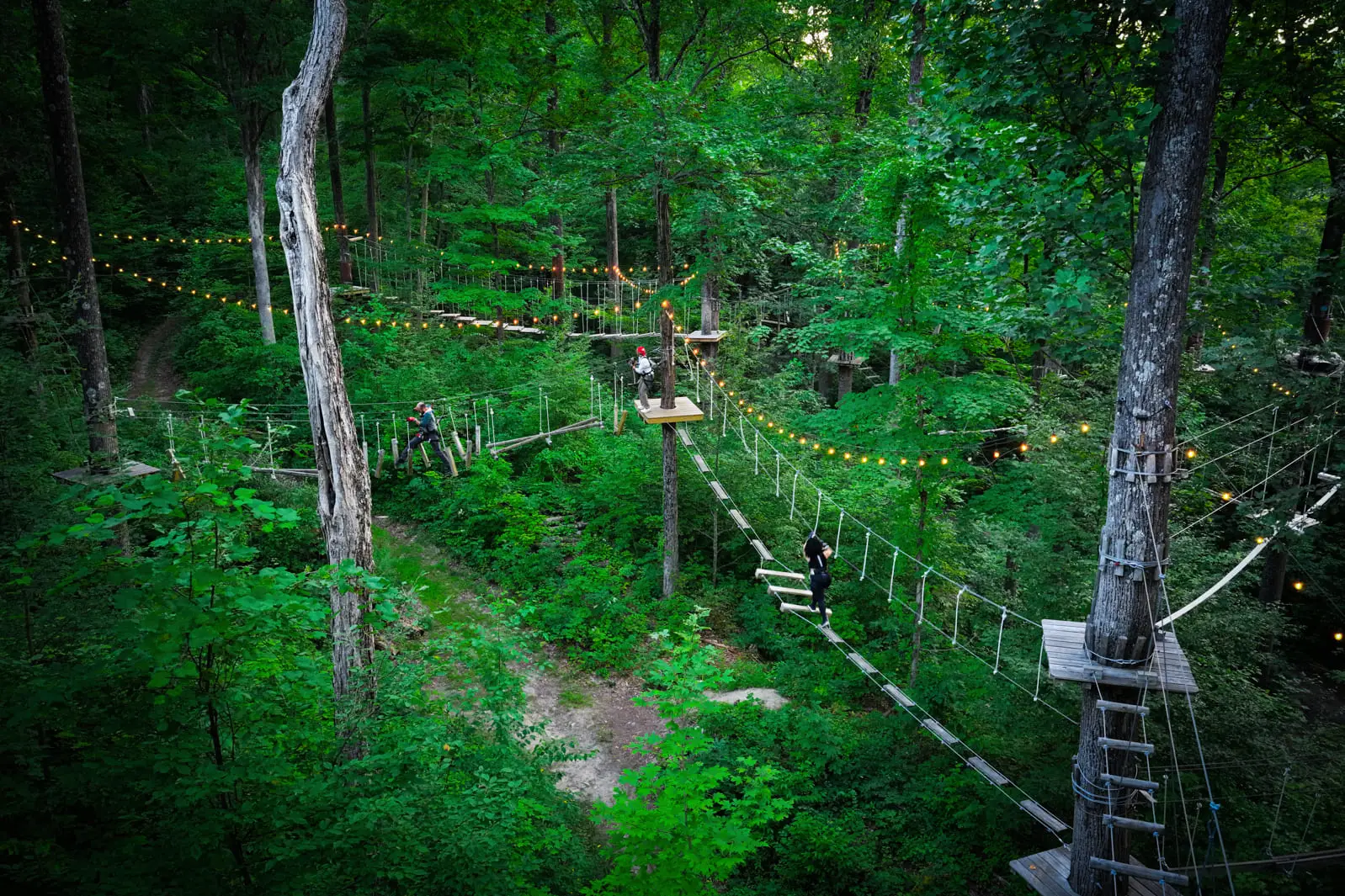
A zipline flips that. The Black Creek Flyer carries you along more than 1,200 feet of cable at heights of up to 50 feet, and the platforms put you right in the mid-canopy. That is where many birds feed, where squirrels travel, and where tree frogs spend their summers. You are standing in their neighborhood for once, instead of looking up at it.
Forests have layers, a bit like an apartment building:
- The forest floor: leaf litter, logs, mushrooms. Home to salamanders, chipmunks, turkeys and deer.
- The understory: shrubs and young trees. Popular with small songbirds and white-tailed deer browsing for food.
- The mid-canopy: the level of most zipline platforms. Woodpeckers, nuthatches, squirrels and gray treefrogs.
- The upper canopy: the sunny rooftop. Warblers, tanagers, vireos, and hawks perched on high branches.
From a platform, you can look down on one layer and across at another. That is a rare view.
Birds to look (and listen) for
Birds are the easiest wildlife to notice from a zipline, mostly because you will hear them first. A few of the regulars in northern NJ forests:
Pileated woodpecker. A crow-sized woodpecker with a flaming red crest. You may never see one, but look for its calling card: big rectangular holes chiseled into dead trunks. Its loud, wild call sounds like something out of a jungle movie.
Red-tailed hawk. The most common large hawk in the state. Look for a pale belly and a rusty tail as it circles over openings in the canopy.
Barred owl. Its call is famous for sounding like “who cooks for you, who cooks for you all.” Barred owls sometimes call during the day, especially on gray afternoons.
Scarlet tanager. A shockingly red bird with black wings that spends summers high in the oaks. Hard to spot, easy to remember once you do.
Wood thrush. You will almost certainly hear it before you see it. Its flute-like song at dusk is one of the most beautiful sounds in an eastern forest.
Black-capped chickadee and tufted titmouse. Small, gray and fearless. These two often travel together and are usually the first birds to check you out.
Wild turkey. Not a canopy bird, but you may see a flock picking through the leaves below you. Turkeys were once wiped out in New Jersey and were reintroduced in the late 1970s. They have done very well since.
Turkey vulture. Those big, dark birds tipping side to side on the wind are not eagles. They are vultures, and they are excellent at their job.
Bonus for fall visitors: September and October bring hawk migration along the ridges of northwest NJ. Look up on a clear day with a northwest breeze and you might see hawks streaming south overhead.
Mammals, from chipmunks to black bears
Eastern chipmunk. Striped, speedy and loud. The “chip chip chip” alarm call you hear from the ground is often aimed at you.
Eastern gray squirrel and red squirrel. Gray squirrels are everywhere. Red squirrels are smaller, feistier and often found around pines and hemlocks, where they rattle off an angry chatter at anyone passing through.
White-tailed deer. Common in NJ forests, especially early and late in the day. From above, you might spot one standing perfectly still in the understory, which is their main trick.
Red fox. Shy and quick. Your best chance is a flash of orange crossing a trail.
Raccoon. Mostly nocturnal, but look for them in hollow trees.
American black bear. Yes, really. Northwestern New Jersey, including Sussex County, has some of the highest concentrations of black bears in the state. Sightings from a zipline are rare, and bears generally avoid busy areas, but it is worth knowing they share these woods. More on bear sense below.
Bobcat. Listed as endangered in New Jersey and found mainly in the northwest. Seeing one would be the sighting of a lifetime. Most people who live here never do.
The small stuff: salamanders, frogs and turtles
Some of the most interesting wildlife in NJ forests is small enough to fit in your palm.
Red eft. A bright orange young eastern newt that walks around the forest floor after rain. That color is a warning: it is mildly toxic, so admire it and leave it be.
Eastern red-backed salamander. One of the most common animals in northeastern forests, and one of the least seen. It lives under logs and rocks.
Gray treefrog. This one is perfect for zipliners. It spends much of its life up in the trees, and it can change from gray to green to match its background. Listen for its short, bird-like trill on warm evenings.
Spring peeper and wood frog. The first sounds of spring in the Highlands. Peepers make the high “peep” chorus; wood frogs sound like quacking ducks.
Eastern box turtle. A slow, domed turtle with orange and yellow markings. If you see one crossing a road, you can help it across in the direction it was headed, but never take one home.
Insects worth slowing down for
Fireflies. Early summer nights in the Vernon Valley can light up with them, usually from June into July.
Monarch butterflies. In late summer and early fall, monarchs pass through NJ on their way to Mexico. Look for them in sunny clearings.
Eastern tiger swallowtail. A big yellow and black butterfly that often floats right at canopy height.
Katydids. In late summer, their loud “katy-did, katy-didn’t” chorus takes over the night.
Luna moth. A pale green moth the size of your hand, with long tails on its wings. They are active at night in late spring and early summer.
What changes after dark
If you join one of TreEscape’s Night Climbs, which usually run every other Saturday in season, you get to meet the night shift.
Bats come out to hunt insects, sometimes around the lights. Southern flying squirrels, which are common in NJ but almost never seen, glide between trees on flaps of skin. Owls start calling. In summer the frogs and katydids get so loud you may have to raise your voice. Nobody can promise a particular sighting, but the soundtrack alone is worth the trip.
Season-by-season guide
Wawayanda State Park, while technically a park rather than a forest, is also right on Vernon’s doorstep and is well worth a visit for its lake and hemlock ravine.
FAQ
What wildlife can you see while ziplining in New Jersey? In the forests of northern NJ, you may spot woodpeckers, hawks, chickadees, wild turkeys, chipmunks, squirrels, white-tailed deer and, in summer, fireflies and gray treefrogs. Sightings are never guaranteed, since these are wild animals, but a quiet moment on a platform often reveals more than you expect.
Are there black bears near TreEscape Adventure Park? Black bears live throughout northwestern New Jersey, including Sussex County. They generally avoid busy areas, and sightings from a zip course are uncommon. Follow NJ Fish and Wildlife guidance if you see one on a trail.
What are the most common animals in NJ forests?
White-tailed deer, gray squirrels, eastern chipmunks, raccoons, and birds such as blue jays, chickadees and woodpeckers are among the most common. The eastern red-backed salamander is also extremely common but rarely seen because it hides under logs.
How much of New Jersey is forested?
Roughly 42 percent of the state is forested, including large protected areas in the Highlands and the Pine Barrens.
How many state forests does New Jersey have?
New Jersey manages about a dozen state forests, ranging from Wharton in the Pine Barrens to Stokes and Worthington in the northwest. It also has many state parks, recreation areas and wildlife management areas.
When is the best time of year to see wildlife in NJ?
Late spring is best for birdsong, summer for frogs and fireflies, and September to October for hawk migration and fall foliage. Early mornings and evenings are the most active times of day.
Is night ziplining good for spotting wildlife?
It is great for hearing wildlife. Owls, frogs, katydids and bats are active after dark. TreEscape’s Night Climbs generally suit guests 10 and older and usually run every other Saturday in season.
Does ziplining disturb the animals?
Forest wildlife is used to regular human activity along established routes and usually shifts a short distance away. Staying on marked paths, keeping food packed away and not approaching animals helps keep the impact low.
Where is TreEscape Adventure Park?
TreEscape is at 414 County Road 517, Vernon Township, NJ 07462, in the Vernon Valley of Sussex County.
The forest was full the whole time
The best part of ziplining through a real forest is not the speed, although the speed is great. It is the realization, somewhere around the fourth platform, that you are a guest in a very busy place. The woodpecker was there before you arrived. The chipmunk will be there after you leave. For an hour or so, you get to live at their height.
If you want to see the Vernon Valley from the canopy, book the Black Creek Flyer, bring the spotting sheet, and give yourself a few quiet seconds on each platform. The forest usually rewards people who pause.