
The first thing many people discover on a ropes course is that it looks easier from the ground.
You watch someone step onto a suspended bridge, grab a cable, and move calmly through the trees, and it seems simple enough. Then suddenly you are forty feet above the forest floor gripping the ropes like your life depends on it, your forearms are burning after ten minutes, and you are wondering how kids seem to be passing you with no effort at all.
What surprises most beginners is that ropes courses are usually much less about strength than they are about movement, pacing, and balance.
People often assume the experience will feel like an upper body workout, but experienced climbers rarely rely on their arms very much at all. Instead, they use efficient movement, controlled balance, and steady pacing to conserve energy throughout the day.
And honestly, learning a few simple techniques can completely change how the experience feels.
Whether you are visiting for fun with family, trying a ropes course for team building, or simply searching for a new outdoor challenge, these small adjustments can help you stay comfortable, confident, and energized for much longer.
What is a high ropes course, really?
When people ask what is a high ropes course, the easiest answer is that it is an elevated outdoor obstacle course built among trees or poles using ropes, cables, bridges, climbing elements, and zip lines.
But once you actually step onto one, you realize it is not just about obstacles.
A good ropes course becomes part balance challenge, part mental challenge, part outdoor adventure, and part problem solving exercise all at once.
At places like TreEscape Adventure Park, climbers move through a progression of aerial elements that range from beginner friendly suspended bridges to more advanced obstacles that require greater coordination and confidence. Some courses feel smooth and approachable while others push people farther outside their comfort zones.
That variety is important because it allows people to build confidence gradually instead of feeling overwhelmed immediately.
And despite what many first timers expect, brute strength is rarely the thing that determines whether someone enjoys the experience.
Usually, the people who tire out fastest are the ones trying to muscle through every obstacle.
Technique #1. Let your legs do most of the work
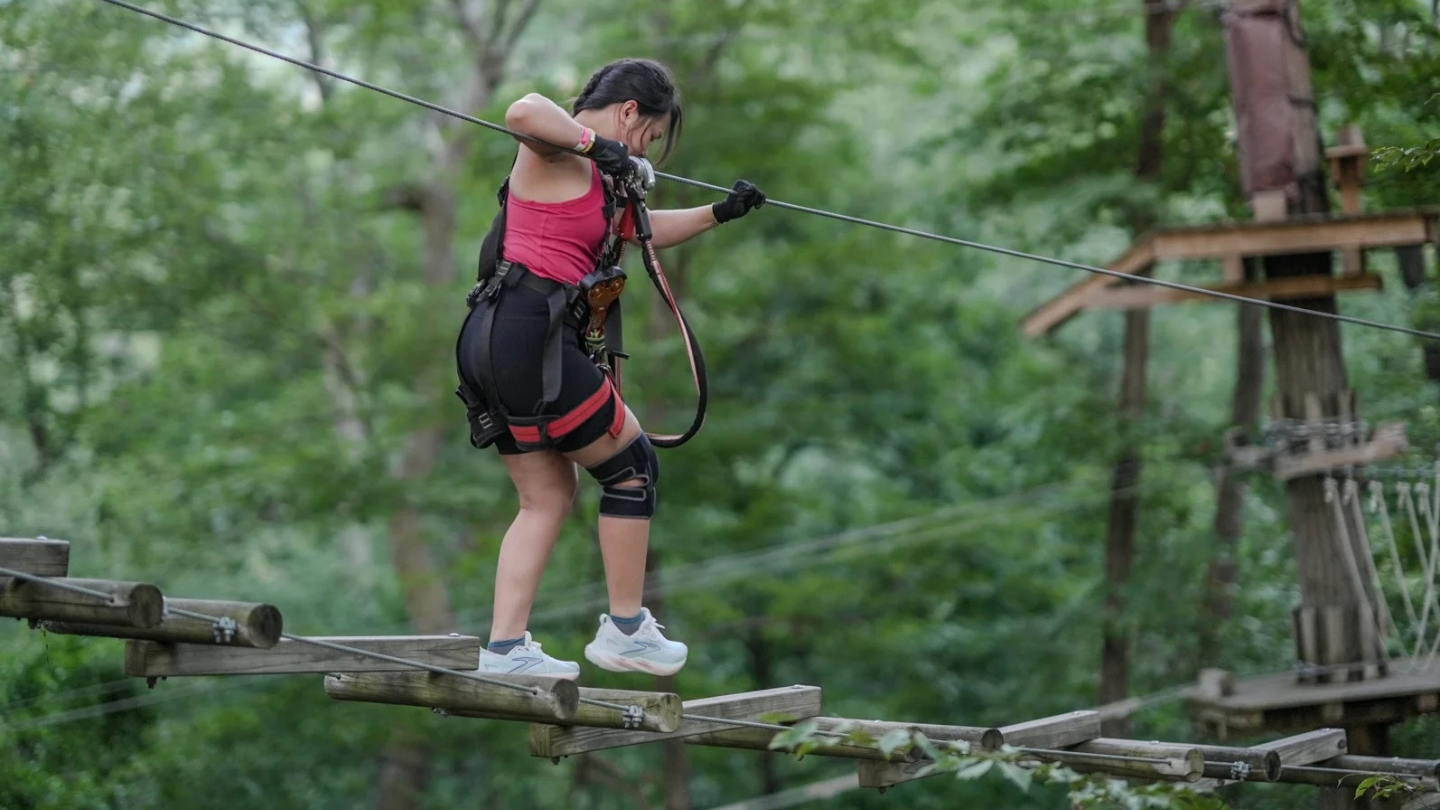
One of the biggest mistakes beginners make is treating a ropes course like a pull-up workout.
The instinct is understandable. When people feel unstable, they naturally grip harder and start pulling themselves forward with their arms. The problem is that your arms fatigue much faster than your legs.
Experienced climbers use their arms mostly for balance and stabilization while allowing their legs to do the actual work of movement.
Think about hiking on uneven ground or skiing down a slope. Your lower body controls most of the movement while your upper body stays relatively relaxed and supportive. A ropes course works very similarly.
When stepping onto suspended bridges or moving elements, try to keep a slight bend in your knees and let your legs absorb the motion beneath you. Instead of fighting every swing or wobble, move with it naturally.
A centered posture helps enormously here.
People often lean backward when they feel nervous, which actually makes balancing harder and forces the arms to work overtime. Staying upright with your weight centered over your feet creates much better stability and requires far less energy.
This becomes especially noticeable later in the day.
The climbers who conserve energy early usually end up lasting much longer and enjoying more courses without feeling exhausted halfway through.
Technique #2. Stop overgripping the cables
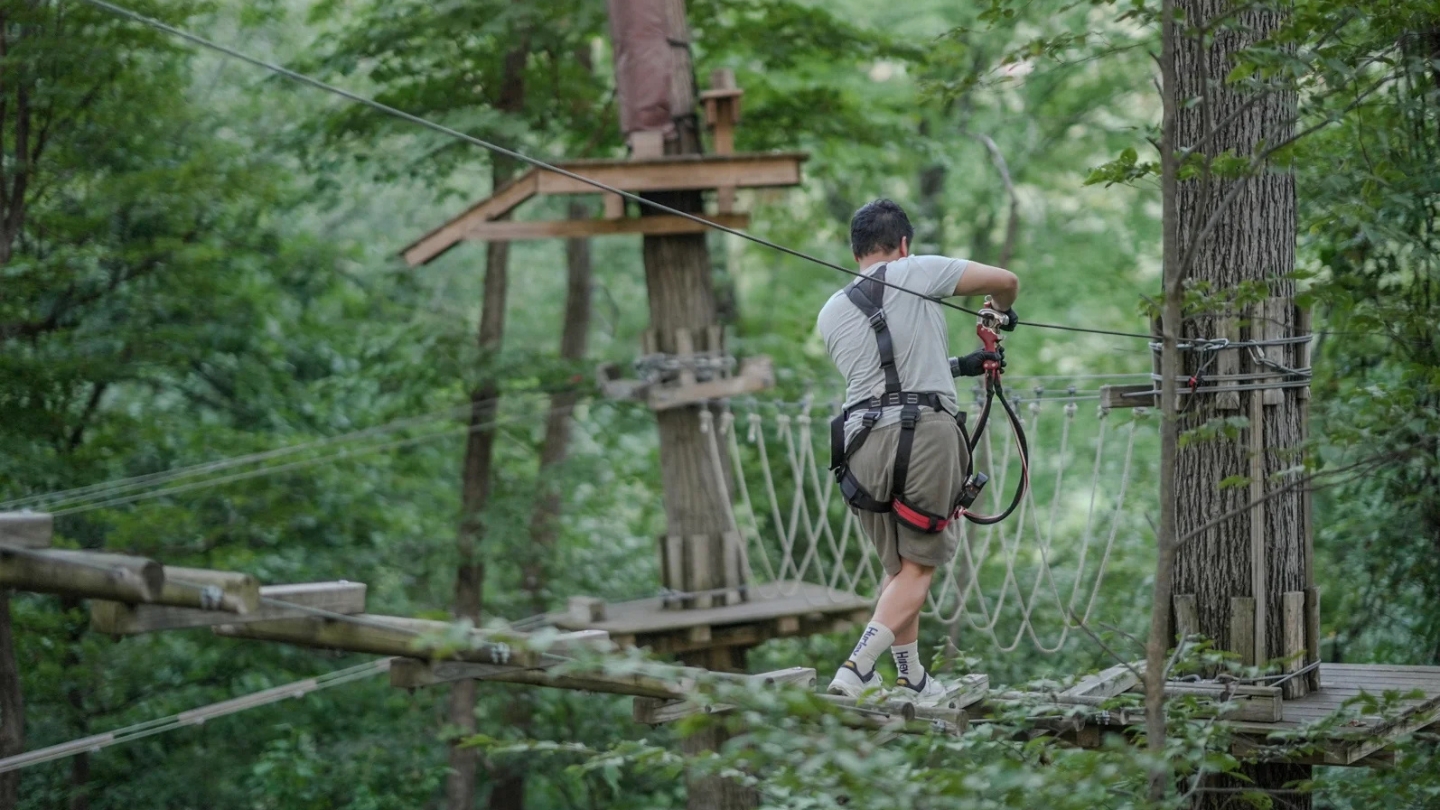
This one alone can completely change your experience.
Most beginners grip the safety cables and ropes far tighter than necessary, especially during their first course. It is a natural reaction to height and uncertainty, but it creates an incredible amount of tension in the hands, forearms, shoulders, and neck.
Within twenty minutes, people feel drained.
The funny thing is that overgripping often makes balancing harder instead of easier.
When your body becomes too tense, your movements become stiff and jerky. Smooth balance requires a certain amount of looseness and flexibility, especially on moving obstacles.
You do not need a completely relaxed grip, obviously, but you also do not need to squeeze every cable like you are hanging off a cliff.
A lighter, more controlled grip allows your body to move more naturally with the obstacle beneath you.
Breathing also matters more than people realize.
Many climbers unconsciously hold their breath during difficult sections, which increases tension and fatigue. Slowing down your breathing helps calm the nervous system and keeps your movements smoother.
Small pauses help too. There is no prize for sprinting through every obstacle.
Taking ten seconds on a platform to shake out your hands, reset your posture, and look ahead at the next element can make a massive difference over the course of a few hours.
The people who pace themselves usually enjoy the experience much more than the ones trying to power through every course as quickly as possible.
Technique #3. Look where you want to go, not straight down
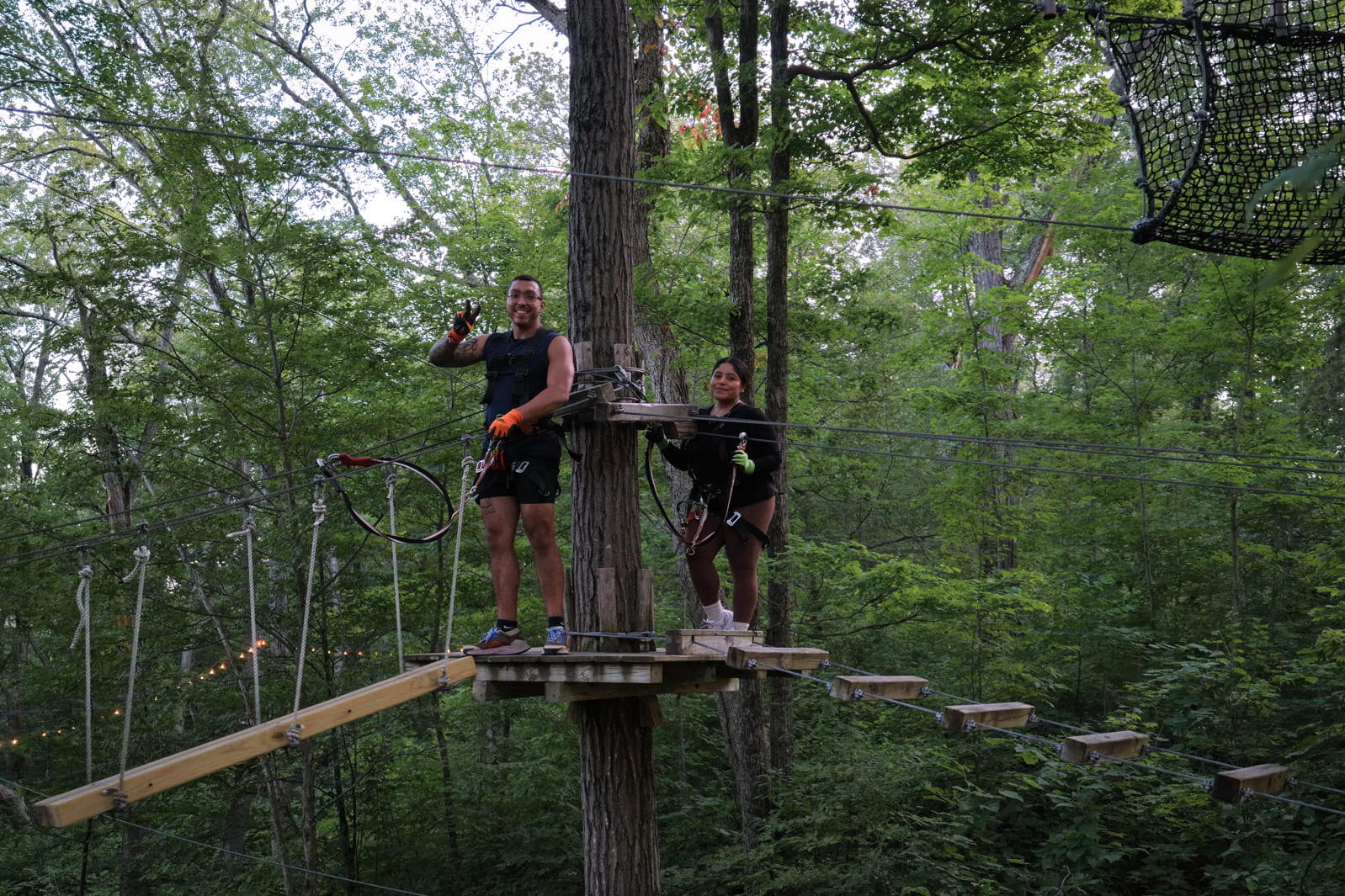 This sounds simple, but it affects balance immediately.
Your body naturally follows your eyes. It works the same way in skiing, biking, trail running, and countless other movement activities.
When people stare straight down at their feet, their posture collapses forward and balancing becomes much more difficult.
Instead, focus your eyes ahead toward the next platform or obstacle.
Keeping your chest upright and your gaze forward helps your body stay aligned naturally.
It also reduces some of the mental intensity that comes from constantly looking at the height beneath you.
One important thing to remember is that ropes courses are designed to move a little.
The bridges sway. The ropes shift. The platforms bounce slightly.
Beginners often try to eliminate all movement completely, which creates tension and wastes energy. Experienced climbers allow the obstacle to move naturally beneath them while staying relaxed and controlled.
And thankfully, confidence tends to build surprisingly quickly.
Most people feel dramatically more comfortable after finishing their first course because the equipment, movement, and rhythm stop feeling unfamiliar.
That gradual progression is part of what makes the experience enjoyable instead of intimidating.
Why ropes courses are surprisingly good for team building
One of the reasons ropes courses work so well for groups is that encouragement happens naturally.
People cheer each other through obstacles without even thinking about it.
Coworkers who barely interact at the office suddenly help each other navigate suspended bridges. Families encourage nervous climbers through their first zip line. Friends laugh together after wobbling through the same obstacle moments apart.
A ropes course for team building works because the environment creates genuine shared experiences instead of forced interaction.
Nobody is sitting through another conference room exercise pretending to participate.
The communication feels real because the challenge feels real.
People naturally learn how different personalities react under pressure, how groups encourage each other, and how small moments of support can completely change someone’s confidence.
And interestingly, many teams leave remembering the shared experience itself rather than the obstacles.
They remember who encouraged them when they felt nervous. They remember laughing halfway through a swinging bridge. They remember surprising themselves.
That emotional connection is difficult to create in traditional indoor environments.
Why pacing yourself matters more than finishing every course
A lot of first-time visitors quietly assume they need to complete the hardest course possible to feel successful.
But honestly, the people who enjoy ropes courses the most are usually the ones who stop treating the experience like a competition.
There is no perfect number of courses to finish.
Some people love gradually building confidence on beginner and intermediate routes. Others enjoy pushing themselves toward more advanced challenges. Both approaches are completely valid.
The best climbers are rarely the fastest or strongest.
Usually, they are simply the calmest.
They move efficiently, stay relaxed, conserve energy, and keep a steady rhythm throughout the day instead of burning themselves out early.
That pacing matters far more than people realize.
What makes TreEscape a good place to practice these techniques
One reason many visitors enjoy TreEscape Adventure Park is that the course progression allows people to find a challenge level that feels right for them.
Some guests arrive wanting a lighter outdoor adventure while others actively seek more physically demanding obstacles. Having multiple course levels allows beginners and experienced climbers to enjoy the same day together without feeling stuck at the same difficulty.
A supportive team by your side every step of the way
You are never left to figure out these courses or techniques alone. Expert park guides are stationed throughout TreEscape, ready to offer helpful tips, encourage you through tough transitions, and lead you smoothly across the elements. Their goal is to make sure you feel confident pushing your boundaries, but if you ever hit an obstacle that feels like too much, there is no need to panic. Our entire on-site staff is professionally trained in advanced aerial rescue techniques. If you find yourself in difficulty or simply decide you have had enough for the day, a team member is ready to assist and will safely lower you down directly from the course, ensuring you always feel supported from the ground to the treetops.
The natural forest setting also changes the overall atmosphere.
Instead of feeling like a manufactured attraction, the experience feels immersive and outdoorsy in a way that helps people disconnect from normal routines for a while.
You are not just climbing obstacles. You are moving through the trees, hearing the forest around you, and spending hours outside in a way most adults rarely do anymore.
And importantly, the experience feels active without requiring elite fitness.
People of many different comfort levels can participate, improve gradually, and enjoy the courses at their own pace.
Learn more about our aerial ropes courses:
Read More →